pamela huber
The Hug Machine
Place your feet on the metal plate, atop the painted shoe prints. Left foot down first, feel the hinge of the metal plate seesaw forward on its fulcrum. See the metal arms of the statue before you swing and swipe you backward. Take your left foot out. Put your right foot in, more controlled now. The metal man’s arms are folding you into him but you must commit, both feet on the lever in their painted place, to be embraced.
A simple Rube Goldberg self-hugging machine.
Your own weight wraps you in his arms. You can lean against his metal chest. Sink in. Those in line behind you will wait as you rest here, for as long as you need.
—
I stepped into the Dirty Clean Hug Machine at the Bombay Beach Biennale, a “renegade celebration of art, music, and philosophy that takes place on the literal edge of western civilization—the shores of the Salton Sea.”(1)
Bombay Beach was having a renaissance. The 1950s destination getaway turned 1990s desert ghost town blossomed in the new millennium as an art darling. I walked the town’s small grid in the spring of 2023, nine years after the Biennale's inauguration. Rising rent prices in Los Angeles and pandemic-and-airbnb-fueled gentrification of Joshua Tree had pushed artists south, into the Sonoran Desert where the Salton Sea glistened under shocking pink sunsets.
Coming south from Palm Springs, I made a right on Avenue A, one side of the town’s rectangular grid. The blocks stretched nine streets wide, from A to H, followed by Aisle of Palms: seven streets stretched between highway and sea. I pulled off for a picture at the humble tan sign with brown letters: Welcome to Bombay Beach. A lone cabbage palm stood to the left of the sign with its single frond sticking up in the air like a pair of fringed green bird wings. Gold light poured through a break in the clouds in the distance, fringing their edges in a radiant soft mauve. The Santa Rosa Mountains stood sentinel in their glaucous blue shade of dusk.
I drove my van to the end of the avenue and turned left onto 5th street, then right off the paved road and up the dirt hill. As I crested the hill, hundreds of vans and truck campers came into view, spread out over the dirt dyke that separated the town from the Sea, which can always be expected to flood and recede. I found a circle of my friends and chose a spot in the large ring of rigs to settle in. My side window faced west, and from there I could finally see the water. The sky was acid flamingo pink, and I joined one friend on his van’s rooftop to watch the sun settle behind the mountains.
I had been traveling through the Sonoran Desert for six months—first Arizona, then Joshua Tree, then down to the tip of Baja California and back—but this was my first time stopped at the Sea’s outpost of the apocalypse.
—
The daytime heat of Bombay Beach was unrelenting, even in spring, so we only wandered at night, in feathered and sequined and fur-lined costumes with LED hula hoops and pixel whips around our necks for impromptu performances.
Sprinkled among the abandoned homes and occupied trailers sat the occasional house purchased at rock-bottom prices and turned into public art displays.
Someone had propped a wooden sign with neon tubes that glowed “Electric Lounge” and beckoned me to a single-story home without window panes where owners painted the blue exterior walls with geometric pink lines.
Marquee bulbs outlined an arrow pointing to the Bombay Beach Drive-In, where 1950s salmon and robin-egg beaters sat in attendant rows facing the old screen.
A blue sign lit up the night with its white vertically stacked neon letters: OPERA. Someone kept the sign lit.
I found my way to the house my friends had turned into a pop-up music hall. The house’s new owner slept in a school bus parked in the yard. Vans lined the street. Zoya greeted me, dropping her empty spray paint can into a trash bag in the yard before inviting me inside. The lights flashed teal, indigo, violet, red, and with each flash they changed the colors of the painted symbols and sayings on the walls.
When the DJ set ended, I met Josiah and Allie at Ski Inn, the only operational restaurant in town, for a nightcap. Sometime after paying the check, I lost my phone and my memory. When the clock struck midnight, somewhere in Bombay Beach’s grid streets, I welcomed the new month, my favorite month, my birthday month. At 1:30 in the morning on April Fool’s Day, I waved to Chris parked next to me as I walked to my van to sleep. Between 9 and 1:30, no one I know saw me.
—
The next day I woke at 7 and began the search for my phone, my earring, my reusable cup, my memories. A friend in my van’s circle lent me a spare phone for the day. Let’s call him Simon, though that is not his name.
I used the loaner to check for clues: no photos in iCloud after 9:03 pm, when I was leaving Club Chaos. No photos posted to social media. No mysterious texts. Find my iPhone says that at 4 am, my phone was close to camp.
I spent the day retracing my steps in the growing heat. I wandered into Cafe Bosna, in The Estates, and asked the musicians preparing for Saturday night if they’d seen my phone. They shook their heads, no. Unbeknownst to me, the Hug Machine rested in the corner, a filigree statue easy to miss without a line of revelers waiting to embrace him.
By nightfall, I resigned myself to defeat and donned my cutest outfit. This was an early birthday celebration, after all. I climbed onto the back of Allie’s motorbike and we drove down the beach to see the lit statues at the edge of the water we dared not touch.
We made our way to Cafe Bosna to hear the musicians play and watch the light installations flash. Stained glass trees rippled in neon kaleidoscopes. Women passed in sequined gowns. In the desert garden, mechanized metal sculptures cast their moving reflections onto other art pieces.
A flat metal sculpture hung from a wire in a spotlight, bouncing in the breeze and reflecting its moving shadow—the stacked heads of women and birds and babies and skulls—onto a hanging white sheet.
Another installation casted “Avoid Reality” onto a mural of a man’s face. His mouth formed a startled O. His hair, bouffant. The metal casting the shadow included two hands, moved by a motor, playing with his hair.
Inside Cafe Bosna, more metal sculptures with motors lined the entryway. A figure with a baby doll’s head and a glowing red lantern torso opened his belly lantern door to reveal a bald wooden doll sitting in a black room, rotating words of twisted metal circling over his head: “Across your face, a brief flash of the true you.” As the belly door shut, the words “flash of the true you” are barely visible as they rotate into view.
And there, in the corner of the room, the wire man himself, with his manifesto written in twisted metal on the wall behind him: the Dirty Clean Hug Machine.
I watched a couple step back from the statue. They were laughing. I missed the exact choreography; I was not quite sure what they had just done, but they walked away and the statue stood alone, staring at me.
Did you have a rough night?
The roughest. My first memory loss in two years. A habit I thought I’d outgrown. But blackouts, I reminded myself, only occurred when I felt safest: among friends I trusted, dancing and laughing, when I was close to home. Like that first road trip in the van, around the campfire in Acadia, passing a whisky bottle. Or my brother-in-law’s 30th birthday, when I lost slap cup and blacked out as I walked into a bedroom with a friend.
Would you like a hug?
I stepped up to the Hug Machine. Placed one foot on the lever and sprang back when the machine’s arms swiped at me. Tenderfooted, more careful then, I eased in, planted both feet, and the arms enfolded me. I do not know how long I stayed there, against this man’s metal chest. His sign explained that your own weight on the lever determined the strength of the hug. I bore down on the tips of my toes.
—
Lever. Pulley. Screw. Wedge. Wheel and axle. Inclined plane.
These are machines, Alan Bernstein told my class of fellow eight-year-olds. Six simple machines.
Mr. Bernstein, who I knew and also did not know was Jewish, just like me, showed us each device. They’d been labeled the six simple machines by a Mr. Rube Goldberg, a famous cartoonist and doodler who I did not know but also knew was Jewish, just like me.
Mr. Bernstein asked us to diagram the cartoon he passed around the classroom. The diagram was a complex series of gears and planks and ropes and conveyor belts, all intended to place a ball in a hole. Steampunk mousetrap. He instructed us to break the complex image down into its constituent parts. See the simple devices making a larger whole.
The day’s task done, he assigned our homework: to devise our own combination of the six simple machines, drawn out, on draftsman’s paper. I went home and studied the blank page on the dining room table.
I looked to my feet at the dog: a miniature dachshund. She answered to Gretal. She was old and stubborn, and would live two months shy of 18. I doodled Gretal onto my paper. Now, I knew, she was part of my machine.
I concocted a fanciful machine that either walked Gretal on a treadmill or delivered her dog treats or neither or both—alas, the drafting paper is lost to me now—but she was its centerpiece, its raison d'être.
The next week, when they pulled me from writing class for our hour with Mr. Bernstein, I handed in my machine with pride at its complexity and shame over my diminished sense of scale, my cramped lines. Mr. Bernstein told me it was excellent.
Litany of key topics I learned in Mr. Bernstein’s class from second through fifth grade: the crusades; animal kingdoms of the sea; how to develop photos in a dark room; the superiority of Google over Ask Jeeves; trading stocks; and engineering complexities streamlined by six simple machines.
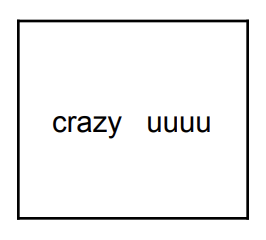
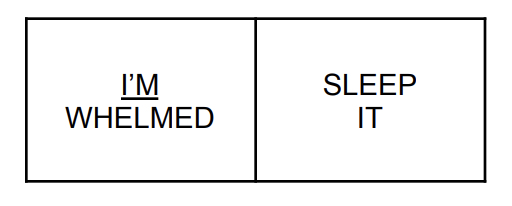
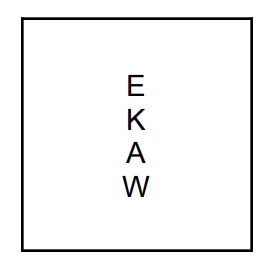
Each week we started or ended the day with a wordle. This is twenty years before the pandemic sensation game that swept the nation. These wordles were box-based riddles. Word games. On a piece of paper, you’d see a simple square with four sides that had content in, or around it. The content was usually letter-based: as in, words. Deciphering the letters and numbers and symbols, in relation to the box, solved the riddle.
For example:
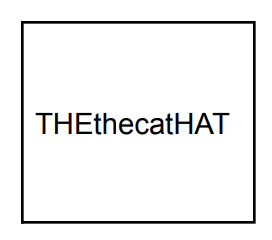
The answer is clearly the cat in the hat.
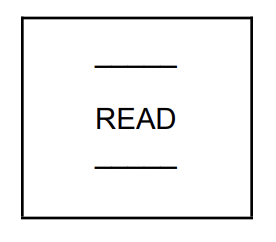
Or try this one on:
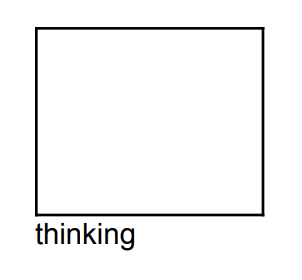
Clearly, this is thinking outside the box.
Sometimes, they were obvious idioms, and sometimes they were trickier.
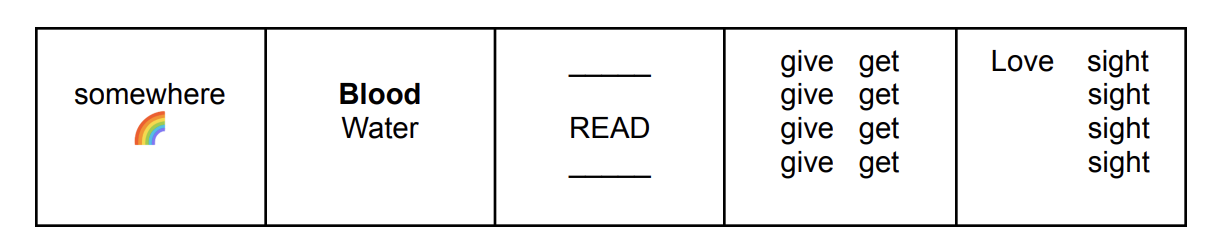
Mr. Bernstein had thousands of these, allegedly, and he’d give us packets of them to solve.
According to the National Institute of Health, which recommends brain teasers to keep the mind sharp, particularly for Alzheimer’s patients, these are called Rebus Puzzles, though Frame Game is also acceptable. But I prefer Mr. Bernstein’s name, wordles, even if the New York Times tries to sue me.
It was Mr. Bernstein who taught me to love words and curiosity and my own cleverness.
He was the only Jewish teacher I ever had. (2)
When I stepped onto the metal plate of the “Dirty Clean Hug Machine,” I was stepping onto a lever. The lever pressed down and pulled a series of ropes around wheels. These pulleys attached to other pulleys, which pulled the hugging machine’s arms shut.
A simple machine, the hug. We just need to be willing to step into it.
—
It had been a rough year, romantically. Before I hit the road, I’d left a two-year situationship with the man who I told my dying grandmother might be the one. I didn’t believe it then, but I wanted her to leave this world unworried for me.
My first kiss on the road blossomed into a three-month-fling with someone far too young for me. When he ended it suddenly and unexpectedly, he told me he didn’t want to make it awkward for our shared group of friends. Stupid, stupid. Hadn’t I learned at 22 that inviting my partner into my community meant he’d steal it?
This was not my first blindside. This was not the first time I asked my community to expel the interloper and they’d refused. Somehow, this breakup at 28 managed to mirror some part of every major heartbreak I’d had at 18, 22, 24, 26. Its fallout had familiar echoes. That this casual fling led to me reliving my worst losses made me feel brittle. Fragile and lacking.
After, I slept my way through Oregon and Colorado and Baja. I resolved to stop trying to turn one-night-stands into two-week flings. On Valentine’s Day, I drank champagne and ate oysters and cuddled on the beach with an older surfer, spit out from a decade in Denver and more lost than I was. We spent two weeks getting to know each other as friends before we kissed each other, and I thought that slow start mattered. I thought we’d stay slow when he invited himself into my van where his sweetness oxidized into a lust that I spent the evening telling to calm down. Where was the man who’d insisted he was past his phase of sleeping around? The next morning, as he left in a hurry, he said that actually, he wanted to fuck someone, fuck someone right now, with no thought or care for her emotions, her needs, her humanity, and since he couldn’t do that with me, he had to leave. When I called later to tell him I was confused and upset, we spent an hour going in circles. I thought we hung up on a mutual understanding.
“He wanted to masturbate into a body,” Noelle told me over brunch while my mom sent me updates about my uncle’s emergency heart surgery.
The surfer messaged, trying to restart our fight. I told him it wasn’t a good time, but I wished him peace. He sent back a message so long, I couldn’t see it all at once on my screen. Noelle read it for me. Said I didn’t need to bother. It was less about me than a manifesto about women. I deleted it without reading and blocked his number.
In Baja, friends recommended self-help books about nonviolently expressing needs and not taking things personally and how the body stores trauma.
Something about sleeping on the beach with other nomads reading the same books, learning the same lessons, helped me finally integrate them.
Ten weeks in Baja taught me what my therapist had been saying for years: I don’t control my circumstances, but I control my suffering. I cannot control others, but I can control how I respond to them.
As I drove north and crossed the border in Mexicali, an audiobook recommended by a friend explained attachment theory to me.(3)
Attachment theory explains how we connect to others in relationships, particularly romantic relationships. Attachment is often determined by how our parents raised us: consistently loving and available; inconsistently available; or totally unavailable or abusive. We can be securely attached (thanks parents!) or insecurely attached. The unsecured camp can be anxious or avoidant—or the dreaded but rare disorganized, anxious-avoidant double whammy.
I knew, before reading the book or taking a test, that I was anxiously attached. My special skills included looking for and being finely attuned to detect threats to my relationships at all times. I had a persistent fear of abandonment. Oh, and I thought that if I performed perfectly, I could stop people from leaving. I was a coy chameleon fitting whatever role would earn me love. A people-pleasing pushover.
Avoidants, meanwhile, value freedom and independence. They’re responsible only for themselves. Not for their partner's feelings. They detest clinginess and will lose interest in you before you can lose interest in them. The anxiously attached love avoidants, and vice versa. The first month is hot hot heat. I’d felt this at 18, 22, 24, 26, 28—all my partners eager until the first sign of need, the first sign of deepening attachment, and then it was, oh fuck.
Of course, we don’t just feel insecure, but we act insecure too. Usually via “protest behaviors,” how anxious and avoidant partners respond to perceived threats to their relationships, independence, and worldviews.
Anxious attachment protest behaviors include phone games—waiting to text until you get a text first, excessive calls and texts—and proceed from there to crying and clinging; the silent treatment; sobbing for attention; and shutting down.
The anxious-avoidant breakup script? It’s not you, it’s me. Something just isn’t clicking. I need some space. You’re further along than me. Can we slow down? Pause? Stop? We want different things.
Oh, what a familiar script. I’d heard it at 18, 22, 24, 26, and 28, repeating to each partner, “What am I doing wrong—it must be me” because each breakup followed the same it’s-really-not-you clichéd pattern.
Crossing into Mexicali, a veil lifted from my eyes. These men, these boys, couldn’t have done any better, and neither could I. We all just needed, at the end of the day, someone who could secure us where we were at. Make our protest behaviors evaporate like steam.
I resolved not to date an avoidant ever again.
Three days later, I met Simon.
—
When I think of Alan Bernstein, I think of my grandmother, because Mr. Bernstein developed Delaware’s talented and gifted program alongside her.
I do not know whose idea the wordles were.
When my mother married into Eleanor’s family, my white Episcopalean grandmother did not care much about her new daughter-in-law’s Jewishness.
Grandma was raised in the Depression, which means she was raised during Jim Crow, and she wrote in her memoir that segregation never made much sense to her. “I don’t see what the fuss is about,” she wrote of white people’s prejudices wherever her family moved, from Missouri to Delaware to South Carolina.
I like to think this spirit made her a safe space for Mr. Bernstein and my mother. They were no longer called the Hebrew race, as their parents had been, but they still needed allies.
Eleanor exuded warmth. She was safety personified. When Grandpa was spouting something casually misogynistic, or he and my father were arguing over what a street in the old neighborhood was named forty years ago, she would look over at me or my sister and wink.
She modeled what safety in a relationship looks like.
When my grandmother was dying of Alzheimer’s, she did brain teasers.
She owned the New York Times crossword dictionary, a present from my father, and when she asked him to buy her a replacement twenty years later, he said, “What for? You’ve already got one and you’ve never even used it.”
“Yes,” Grandma said, “But they’ve released new words, and I might need to use it.”
The crosswords were the first to go. Then sudoku. By the end, she was on word searches. And then she slipped into a box, at the very end, that words couldn’t escape from, and I couldn’t make sense of, no matter how long I puzzled over the riddle of it.
When words failed at the morphined end, all I could do was hug her.
—
Like the surfer, Simon was older and nomadic and interested in becoming my friend first.
So the Sunday of Bombay Beach Biennale, when Simon invited me to stay one more night camped on the lakebed dyke, when he invited me to eat dinner in his van and watch a movie from his couch bed, I was on guard. I would not flirt. I would not make the first move.
But then Simon surprised me with his honesty.
“Can I say something, since you’re a girl on my bed, and this could be awkward? I think you’re really pretty, and I’d love to get to know you, but there’s no pressure. We can just cuddle and watch the movie.”
The surfer, too, had promised only to cuddle me. But I nodded and let Simon wrap his arm around me. I leaned in.
I told him I’d been here before, with a friend in the community that didn’t pan out. I didn’t want to get a reputation. I didn’t know if going any further was wise.
“We don’t have to do anything you don’t want to,” he said.
And when he kissed me, with more passion than I anticipated, I saw myself from above. I saw myself with Simon and the surfer at the same time. How could I avoid repeating my mistakes from the winter? I was a clever girl, after all, and this had to be a solvable puzzle.
The kissing was more intense now, our forgotten comedy playing in the background. I tried to come up for air.
“I’m not going to fuck you,” Simon said. “But I’ll make you wish I would.”
I knew in my gut that I didn’t mean to sleep with this person, this friend, this peer in my community. No, no, no. Too many repeats. Too many patterns.
But Simon was older and skillful and knew how to weaken my logic until it ceded the bed, and in the evening we kept our promises to ourselves, and in the morning, we broke them all.
—
I spent four nights in Simon’s van.
On the first night, I asked him about his attachment style. He was not an avoidant.
The next morning, fierce winds kicked up noxious clouds of playa dust, unsettling me and sending us from Bombay Beach back to Joshua Tree.
Before we left, he listened in on my video call. I was taking an 8-week course on Jewish meditation. Simon was not Jewish, as I had supposed, but he took an interest in the class.
So, not Jewish, but not opposed to my Judaism. Besides, attachment style was more important to me then anyway.
“You seem secure to me,” I said on the second night.
“I can be with the right person,” he said. The night was calm and still outside.
On the third night, as I was talking about my plans to drive to Alaska that summer, thinking aloud about how vulnerable and open we could still be with one another for such a brief time, I said, “My friend Noelle has an expression I like: ‘We can fall in love for a week.’”
I’d been focused on “for a week.” We can enjoy being open and vulnerable, even if this ends soon.
Simon focused on “fall in love.”
“I think that’s what we did,” he said.
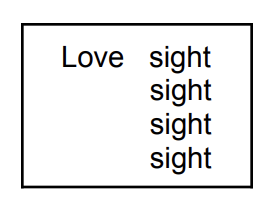
He told me we’d fallen in love, as much as two friends of a few weeks can in a few days. He qualified it, not to sound crazy, but it was crazy. It was intoxicating. In his bed while our community slept scattered around the desert yard, he called me his dream girl. He asked to go to Alaska with me. He asked for more time.
I asked for a breath, a moment to think.
He said he couldn’t tell how I felt.
Usually I was the one asking my partner how they felt. How did I feel? I was surprised to realize this was a puzzle, a riddle I couldn’t find the right answer to, for myself or for him.
“You overwhelm me with compliments and your feelings and I’m just being reactive,” I tried. “I can’t proactively figure out what I feel.”
Somewhere in there, I told him I loved him. I was not in love. But I had love for him. I could fall in love with him. Given more time. Which he wanted. Which I could not give.
We resolved at the end of night three to let me drive away. Then, on night four, I said, “The book told me when you find a secure partner to hold on with all your might, to not let them go.”
“So don’t let me go.”
It was unrealistic and irresponsible to think we could start to date as I traveled onward to Alaska for the summer, as I left the van for grad school in the fall.
“Let’s be delusional,” I said.
I was giddy and punch drunk and secretive. I hoarded this precious new thing, determined not to tell another friend in our community until I knew there was something beyond the ephemeral to report. I tried so hard not to repeat my mistakes from the past. Not to draw my community into more relationship drama.
We only had four nights together because I had to drive to a festival five hours away. It was sold out, so he couldn’t come with me, and I wasn’t sure I wanted him to. I needed time to think. To figure out how I felt. I’d already stayed an extra day to be with him. I had volunteer shifts to get to, and I had to go.
“Not the end, not the end” I whispered as I kissed him goodbye, convinced I could bring him on the first leg of my journey up the Pacific, turn my trip north into a two-week fling with lasting power, with teeth.
“Until next time.”
—
The festival was another birthday celebration with friends from Baja who’d missed the Biennale. I hadn’t seen them in a month, and they welcomed me back into their fold with warm hugs.
I thought the space from Simon would give me enough time to really think about him coming north with me. Was it worth it to change all my plans to make room for him when I was leaving my van in a few months? There was so much I wanted to do in Alaska that his body wouldn’t allow. My head was full of his arguments and counterarguments. He promised I could leave him alone while I adventured; he was so often not invited at all because folks worried about leaving him out. I was going to Alaska alone and might need the company.
He was texting me nonstop, filling my head with him. There was no room for the festival, for my friends. I felt anxious to make a decision.
Here was a riddle I could not solve, could not put words to or name. The box: a van. The words: I love you; I can’t let you go; dream girl; delusional. The wrong answer: I don’t know.
Maria insisted, “You shouldn’t be thinking about this guy so much at a festival. This is far too serious. It’s only been a week!”
“You would say that, you’re an avoidant.”
“I’m an avoidant so I don’t get trapped.”
So I told Simon I was putting my phone away. I took a small white tab gifted by friends from my kitchen drawer and set it on my tongue and focused on enjoying my night.
But something about Simon was still unsettling me. And acid, like psilocybin, does not disappear thoughts: it amplifies them, cycles them on repeat until epiphany.
A pre-van friend once told me she was head over heels with a guy she’d known for a month. When I saw her two months later and asked about their trip to Florida, she admitted she’d snuck from their hotel room when he went for ice.
“Oh, he full-on lovebombed me, dude,” she said.
“Lovebomb, lovebomb, lovebomb,” the acid chanted, a Greek chorus in my head.
Maybe he’s doing it by accident, I reasoned. Because he’s anxiously attached.
I wandered into the camp at dark and told Mohit: “I think Simon might be lovebombing me.”
“What makes you feel that way?”
The more I tried to pin down words to describe the unsettled feeling in my stomach, the more sure I felt.
By the time Maria came back to camp and I told her my epiphany, she sighed with relief and said, “So what are you going to do now?”
—
When I was ready to leave the hug machine, I leaned back and felt the sharp metal arms tight around me. Trapped. A moment of panic. I could not leave.
I ricocheted forward against the hug machine’s steel metal chest. Glanced down. My feet still on my tiptoes, pressing down on the lever.
I had to learn to take my feet off the lever. To let go of my need to be held tight. Held down. Only then did the machine release me.
I fell that week into the briefest of relationships that seemed safe, but was sharp metal trap. I could see now that despite the short amount of time in the machine, I had to exercise great care taking my feet off this lever, lest I be spit back out into the world violently.
“I found your phone,” the machine told me. “You must have dropped it in my bag at the Biennale. This seems like fate?”
I kept my suspicions to myself. I prepared to step off the lever.
The machine will trap you if you keep your weight invested in it. When you remove yourself, its arms can swing and its metal teeth can mash but they can’t reach you. Just keep your distance.
My friends were there to guide my step back, to catch me when my leg almost caught, to help me keep my distance.
And when the machine accused me of breaking it and manufactured a manifesto against me and sent it to all our friends to read, I learned that a machine and lies and projection cannot hurt me unless I let them. I alone control the lever. I alone control my suffering.
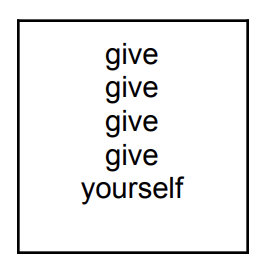
I finally found the words to answer the riddle of my loneliness: it’s better to learn to live in my own solitude than walk naively into any old hugging machine.
Safety in a relationship begins at home, in the safety of my own body with myself. Trust is easier to build than rebuild, and that includes trust in ourselves. It took me months after stepping off the lever to accept the hardest lesson the hug machine had to teach me:
(1) “About” by Bombay Beach Biennale
(2) After writing this essay, I took a letterpress class for credits I didn’t need in my final semester of graduate school just to have one other Jewish teacher in my 18 years of education.
(3) Attached by Amir Levine and Rachel S. F. Heller.
Pamela Huber holds an MFA in Creative Writing from the University of Montana. She was raised on the waters of the mid-Atlantic, traveled the continent in her self-converted campervan, and now lives in Alaska. Her writing has appeared in journals including CIRQUE, Atlanta Review, Grace & Gravity, The Journal of Lost Time, and the Mid-Atlantic Review. She has received awards from Glimmer Train and been nominated for the Pushcart Prize. She lives online at pamelahuberwrites.com.